By: Dustin Cormier
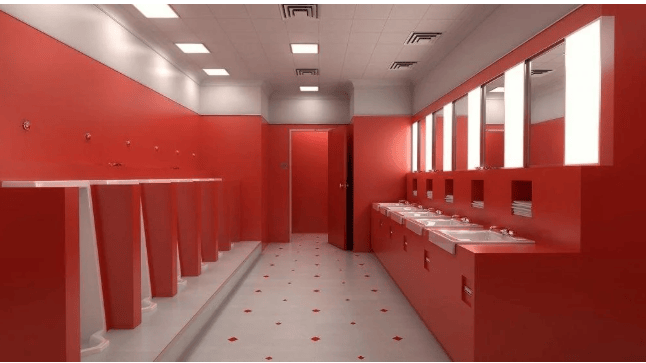
You open the door to your bedroom, walk inside with some snacks and a drink in hand, and lie down on the bed. You grab the remote, turn on the TV, and search for that movie you’ve been waiting to release online because you were too broke to see it in theaters. But it’s wintertime. Snow falls softly against the breeze outside. You want your favorite sweater.
Where the closet should be is a red door with a silver doorknob. And immediately, the most primal of fears is awakened: the fear of the unknown. How did the door get there? Where does it lead to? What happens if I open? What happened to my closet? At the core of all these questions is a desire for survival. All because of a standard, everyday object we use without thinking about.
This is das heimliche, which translates to uncanny or unhomeliness. Popularized by Sigmund Freud in his titular essay in 1919, this phenomenon occurs whenever something disturbs the comfort of one’s space with an eerie sense of dread, discomfort, and fear, often by awakening one’s repressed childhood fears. But it doesn’t have to awaken a childhood fear, like clowns, although they’re perfect examples. It must only awaken primal fears, the most terrifying of these often being the fear of the unknown.
So think about the red door again. Using das heimliches second translation, unhomeliness, we can outline a series of steps to achieve the feeling of uncanniness in a story.
1. We must first establish a feeling of comfort or homeliness. An adult bedroom is the perfect example of this. We begin and end the day here, making ourselves our most comfortable through TV shows, snacks, video games, etc. and most vulnerable through changing clothes and sexual acts. No one envisions going into their bedroom to feel unsafe, but for its perpetual sense of comfort.
2. Introduce the Uncanny Object. Any object, like the red door, that does not belong or disturbs the expectations of the world set before us, that does not make itself known, achieves this effect on the viewer. If the Red Door were to open, and someone come out and explain it, while it may be jarring and still horrifying, it would no longer be uncanny. The horror lies in the lack of explanation.
While these two steps are all that is needed to create the effect of das heimliche, The Shining achieves its status as one of the most terrifying movies to date, by quietly introducing a third step to this process.
3. Have your protagonist find the same sense of comfort in the object as they would if it wasn’t there, therefore creating the same sense of unknown in the character as the object does to the setting.
This is why the Shining is brilliant. By having Jack Nicholson portray Jack Torrance, the film’s protagonist, as someone who feels hollow, disturbed, and psychopathic from the very first frame of the film, the object of horror is not only the ghosts of the Overlook Hotel, but Jack himself.
Whereas in traditional horror, the protagonist is meant to be the grounded force against the supernatural you root for to overcome evil, Jack turns the narrative on its head by becoming that uncanny evil. Most importantly, you cannot pinpoint the moment it happens. It is never explained to you when, why, or how Jack turns into the swinging axe monster he acts like at the end of the film.
Is it when he promises Danny he’d never hurt him? Is it when he first succumbs to temptation and grabs a drink from Lloyd? Is it when he kisses the lady in the tub, only to watch her transform into a rotting corpse in front of his eyes? It is a gradual descent into madness with little explanation other than cabin fever, which seems like a rather unintellectual explanation for such a film.
But a psychopathic man attacking his family with an axe has been done and can be done over and over without achieving the same levels of horror as the Shining does. In fact, in most other films, if Jack were to act strange without explanation, it wouldn’t work, because it wouldn’t be uncanny. It could be explained by some mental diagnosis, which while Jack Torrance’s action perhaps could be, are made evermore complicated by the ghosts of the Overlook.
The most terrifying sequence of the film starts when Jack hears music playing in the empty hallways, and enters the July 4th Party going on in the Gold Room. A million red doors that Jack treats as normal, acting as though these people have always been here.
The primal fear of the unknown is overloaded. We have no clue who these people are and what their intentions are and we have little to no clue our protagonist’s state of mind. Our sense of safety has been thrown out the window by a ballroom party and a man walking to a bar. This should not be horrifying, yet it is considered scarier than many than the gore of the Terrifier movies, mystery of old slasher franchises, and whatever new tricks directors throw at audiences today.
Quiet horror with substance will always triumph over big loud jumpscares for terror’s sake. And when the horror of a scene is left to the imagination of the audiences, when a constant flow of what-ifs run through their mind, and when the pieces of the puzzle are given to them to solve, a nature such as the Shinings is created, because no other film terrorizes the viewer’s imagination in the way Stanely Kubrick’s 1980 masterpiece does.
The Fashion Suits the film. 5/5 stars.
 The Fashion Suits
Leave a comment